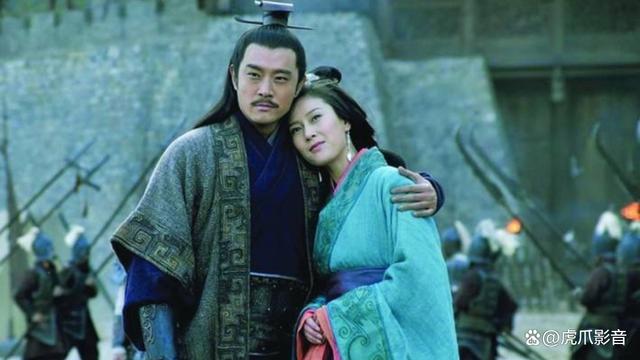
Many people are not familiar with Wu Zetian’s reign as emperor. Let’s follow the editor of the History Encyclopedia to appreciate it together.

What kind of person was Wu Zetian? Wu Zetian was quite insightful, and her way of being a person was to be good at approaching reliable people. As a successful person, Wu Zetian has her own set of life strategies, which means that she can always rely on her talent and wisdom, repeatedly observe her words and expressions, seize opportunities, use the “reliance technique”, and find the “door to success” for herself. This is her personal skill, relying on Li Zhi to open up her own life situation. This is her tactic, isn’t it?
There is a distinction between tolerance and narrowness in dealing with people and things. Which one does Wu Zetian belong to? Wu Zetian, who longed for power, not only brought disaster to the Li Tang royal family, but also pushed the Wu family into an endless sea of suffering, which is related to Wu Zetian’s habit of doing things to the extreme. That is to say, Wu Zetian often regarded the word “jue” as her way of being a person. Wu Zetian’s uniqueness in being a person is intertwined. She not only sees one side of the problem, but also the other side. She can always sort out the complex and chaotic interpersonal relationships, find a “thread”, and weave the fabric she wants. This is her ability to be a person!
Use a feint to leave confusion to others. The difference between feints and actual moves lies in the two words’ true ‘and’ false ‘. Is it using false tactics or practical tactics to conduct oneself and handle affairs? This is not a question we can simply answer. For Wu Zetian, the method of virtuality and illusion was commonly used, which implied her principles of being a person and doing things. Wu Zetian’s virtual and real moves can be described as mysterious and unfathomable. She is accustomed to using such tactics to deal with the left and right in order to take the initiative. When she is under various pressures, she still uses virtual and real techniques to adjust, which can serve as a temporary buffer.

She still treats the people she likes well. The relationship between being a good person and using people is close – if you treat others generously, they will help you. The most understanding person is not always putting selfishness on their mind, but opening up their heart of kindness and absorbing people’s hearts. Wu Zetian’s kindness towards Di Renjie shows that she valued the people she liked with emotions, and as long as she used them, she must have a tolerant heart. The relationship between using people and being a good person has been discussed since ancient times, and there is a recognized principle that as long as people are used, they must have a tolerant heart.
Wu Zetian knew the essence of it well, so how did she treat officials? Wu Zetian’s attitude towards life was to be tolerant when necessary. As a courtier, Wu Zetian’s tolerance was not without restraint. In fact, Wu Zetian’s tolerance was not only based on her understanding and reliance on her subjects, but also received rewards. Many people claim to be ‘tolerant towards others’, but in reality, it is difficult to do so when faced with practical problems, which is a common problem among many people. Wu Zetian emphasized the imperial examination system and established the martial arts examination system. She recognized talents and employed a large number of talented people to govern the country.
Overall, during her reign, the country was peaceful and there were no peasant uprisings. The number of households increased from over three million when Li Shimin passed away to nearly six million when she died, which is the best historical portrayal. Her life was inseparable from political struggles. It was indeed not easy for her to ascend to the throne. After her death, she restored history and continued the patriarchal era, so she was greatly vilified by politicians and literati in later generations. Only modern Mr. Guo Moruo, Ms. Song Qingling, and the great leader Grandpa Mao have given her extremely high praise.
References: “Old Book of Tang”, “Zizhi Tongjian”